The South Australian Metropolitan Fire Service (MFS), like many other fire services around the world, have seen a rising number of incidents involving lithium-ion batteries, particularly in relation to products such as e-bikes and e-scooters.
Lithium-ion batteries are increasingly being used in household appliances, children’s toys, e-bikes, power tools – and even lawn mowers. These batteries can be in various forms including cylindrical, prismatic, pouch, and device specific styles. Lithium-ion batteries can be difficult to identify as there is currently no requirement or standard for labelling. If the battery is rechargeable and has printing which contains words such as ‘lithium ion’ or ‘Li’ it can be assumed that it is lithium-ion.
Lithium-ion batteries are safest when used according to the manufacturer’s instructions. Never modify or tamper with the battery system, including attempting to build your own battery or equipment. It is important to monitor batteries on charge and disconnect them once the indicator shows that a device or battery has been fully charged. The MFS recommends charging devices with large batteries away from exit/entry points and other ignition sources or fuels, and ensure your home is fitted with working smoke alarms.
When lithium-ion batteries fail they may enter a process called ‘thermal runaway’. This involves violent bursting of the battery cells, release of toxic, corrosive, flammable, and explosive vapours and gases, and an intense, self-sustaining fire that can be difficult to extinguish.
If any device or battery starts to give off gas or smoke, or emit flames, it is important to evacuate the area immediately, avoid inhaling the vented battery gases as it is highly toxic, and call the fire service on Triple Zero (000).
NEVER touch, move or try to extinguish a lithium-ion battery fire. No matter how small the fire might seem, the risk of explosion and release of toxic vapours and gases is high.
Fire and Emergency Services from around Australia and New Zealand are working collaboratively with subject matter experts and stakeholders from around the world, to better understand the risks and hazards, and to develop best practice guidelines for the management of lithium-ion batteries incidents.
For further information:
Battery safety tips, battery handling and recycling - MFS factsheet
Lithium-ion batteries, tools and e-bikes - Battery and charging safety
Smoke Alarms - MFS factsheet
Lithium-ion batteries and consumer product safety – ACCC publication
To recycle used batteries/find a battery drop off point Australia’s official battery stewardship scheme - B-cycle (bcycle.com.au)
On 5 January 1914, SA Fire Brigade Firefighter Herbert Hedger arrived at the burning Buttery and Sons Furniture Factory on Rundle Street at Kent Town, when the roof collapsed and a huge flame shot across the road, knocking him off his feet.
The heat from the blast is said to have been so intense it scorched the paint on the doors of homes opposite the burning furniture factory.
Firefighter Hedger received facial burns yet continued to work for several days, before dying in the Adelaide Hospital 25 days after the factory fire on 30 January 1914. A coroner at the time scoffed at the idea that shock and smoke inhalation could have caused him to perish.
Firefighter Hedger’s gravesite had fallen into disrepair and was refurbished thanks to the coordinated efforts of the Fire Service Fund, Adelaide Cemeteries Authority and MFS.
SA Fire Brigade Firefighter Herbert Hedger left behind a grieving widow Emily and three children. His descendants proudly participated in the Rededication Memorial Service (pictured), which was particularly moving for all.
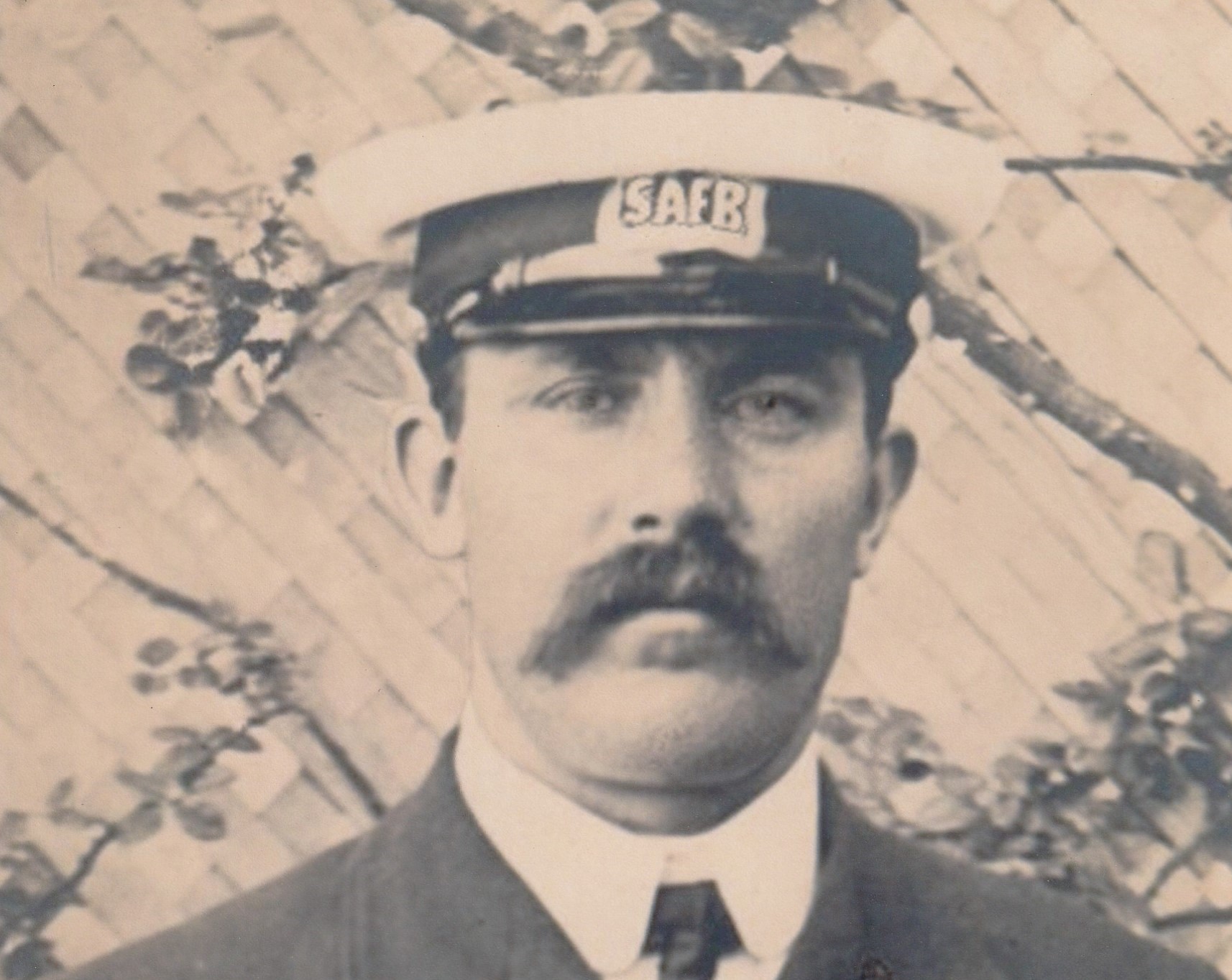
SA Fire Brigade Firefighter Herbert Hedger
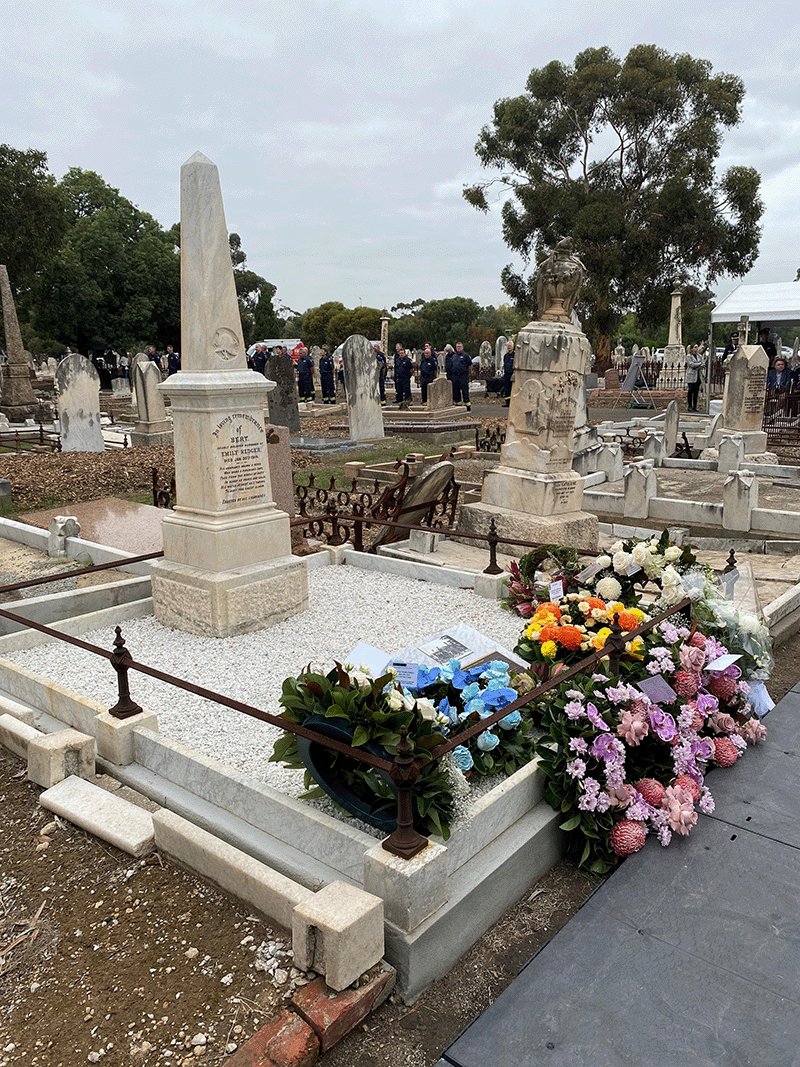
Firefighter Hedger’s refurbished gravesite
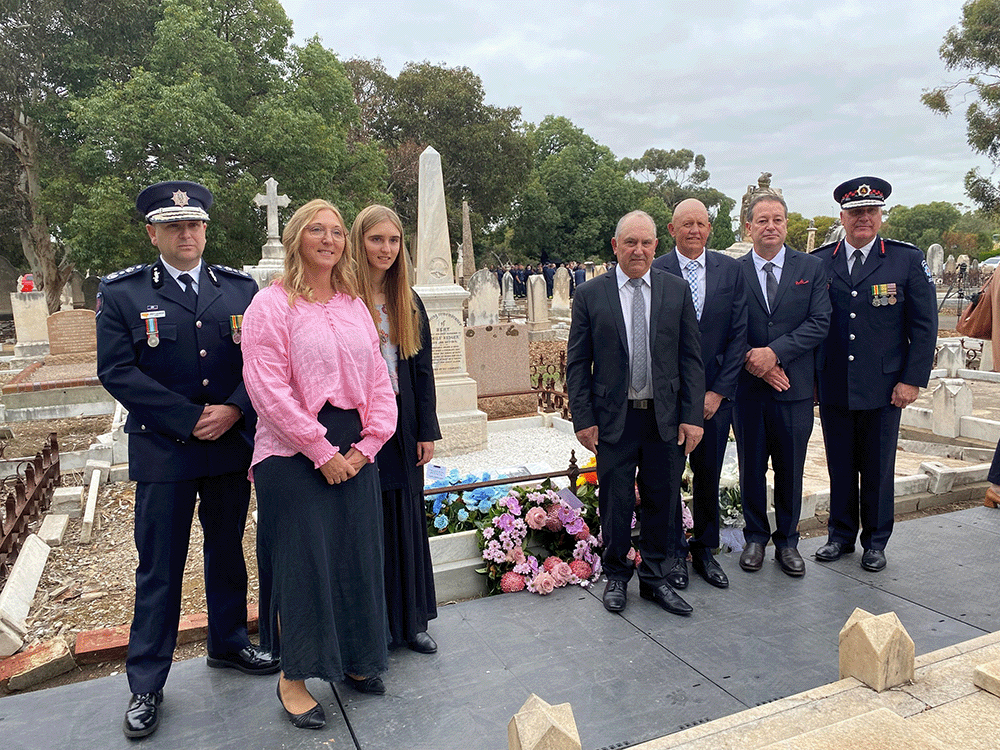
MFS Chief Officer Morgan (R) and CFS Chief Officer Brett Loughlin (L) with Firefighter Hedger’s descendants.
International Firefighters’ Day was developed in response to the tragic loss of five Victorian firefighters during a bushfire at Linton in Victoria, in 1998.
The 4th of May is also St Florian’s Day. St Florian is the patron Saint of firefighters who was an officer of the Roman army. St Florian is credited as a powerful protector from the dangers of fire and water.
In South Australia, MFS and CFS firefighters are selfless in their pursuit of community safety through the protection of lives, homes, businesses, infrastructure, and the economy.
International Firefighters’ Day is an opportunity to honour past and serving firefighters, and the memories of firefighters who have lost their lives in the line of duty.