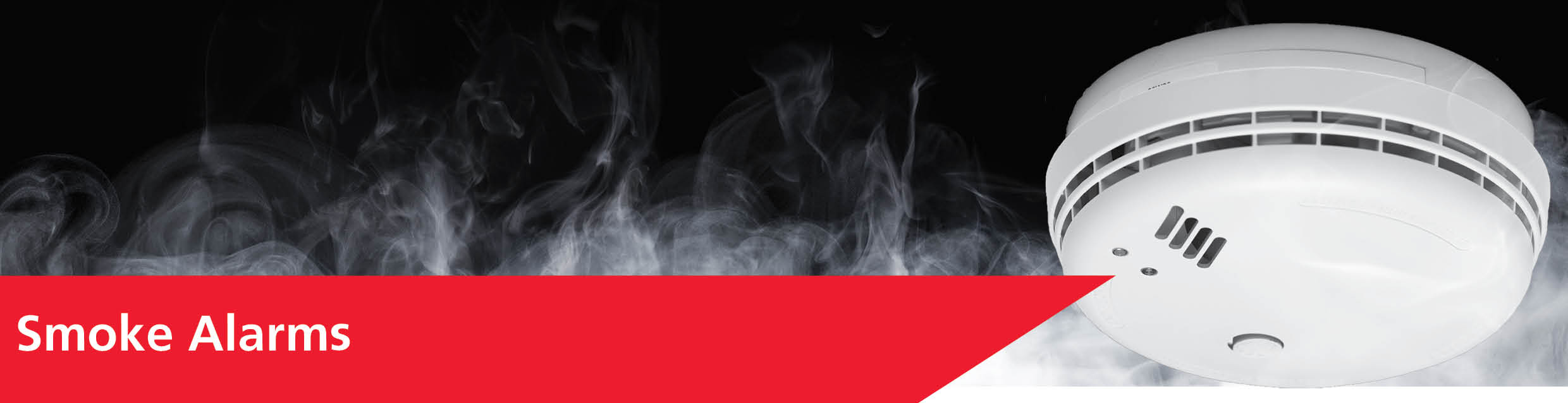
In South Australia, legislation is in place to make domestic smoke alarms compulsory for all domestic dwellings.
Correctly located working smoke alarms give early warning of fire, allowing occupants time to evacuate safely.
To confirm which smoke alarm you are required to install please refer to the South Australian Metropolitan Fire Service (MFS) home fire safety fact sheets Smoke Alarm Quick Guide or Smoke Alarm Legislation
Domestic smoke alarms can be photo-electric or ionisation.
For those who are deaf or hard of hearing, there are smoke alarm systems available that incorporate strobe lights and vibrating elements as well as the audible alert signal.
The MFS recommends that the best protection is provided by 240-volt photo-electric smoke alarms that are interconnected to give the earliest warning possible.
Interconnectable Alarms
When multiple smoke alarms are installed in a home, the MFS recommends the alarms are interconnected. This is a legal requirement in new homes built since 2014.
Quality Assurance
Only smoke alarms which comply with Australian Standard 3786 can be installed in domestic dwellings in Australia.
Power Supply Options
Smoke alarms are either hard wired (240-volt power supply with battery backup), or battery powered (replaceable or 10-year long-life battery).
The maintenance of domestic smoke alarms is critical to ensure they work correctly.
In rental homes the owner of the property is responsible for the installation and maintenance of smoke alarms.
All domestic smoke alarms should be replaced after 10 years regardless of their power source. Older alarms may malfunction or stop working entirely.
CHANGE the battery once a year or if a "low battery" warning beep activates.
Remember: The 240-volt smoke alarms may also have replaceable backup batteries which must be changed every year.
TEST by pressing and holding the test button once a month until the alarm sounds.
Test the backup battery of a hard-wired (240-volt) alarm by isolating the power supply (main switch or circuit breaker) before pressing the test button.
Ensure all interconnected smoke alarms activate at the same time when any one of the test buttons is pressed.
CLEAN your smoke alarm every six months by using a vacuum cleaner with a soft brush attachment to remove debris. Test the alarm after cleaning.
DISPOSE smoke alarms safely. Ionisation smoke alarms contain a minute particle of radioactive material. Ensure you dispose of them at a dedicated recycling facility or contact your local council.
Old photo-electric smoke alarms can be discarded with normal domestic rubbish.